Wondering why homes in Faubourg Marigny and Bywater feel so distinctive the moment you turn onto the block? These neighboring New Orleans districts share a rich historic fabric, but their architecture tells slightly different stories. If you are buying, selling, or simply trying to understand what gives these streets their character, this guide will help you spot the styles that define them and know what details matter most. Let’s dive in.
Why Marigny and Bywater Feel Different
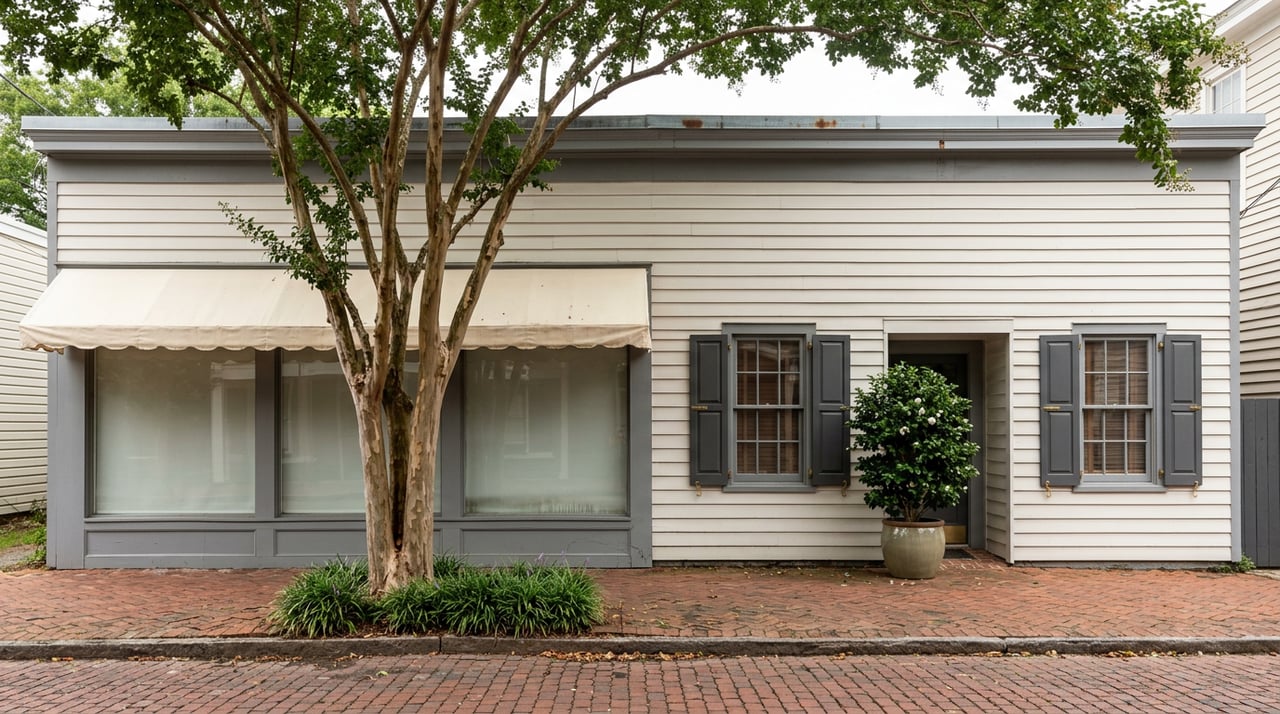
Faubourg Marigny and Bywater sit just below the French Quarter, and both are shaped by a dense, historic urban pattern. According to the city’s historic district guidance, many buildings are set close to the street, with limited side yards and a strong relationship to the sidewalk. That is a big reason these neighborhoods feel so walkable, layered, and visually connected.
Their development timelines also help explain the mix of homes you see today. Preservation Resource Center history notes that Marigny was subdivided in 1806, while Bywater developed in pieces beginning in 1807. Over time, that produced a blend of early Creole forms, later 19th-century influences, and early 20th-century updates.
Marigny tends to show more stylistic variety. PRC describes it as a neighborhood of Creole cottages, shotguns, and Classical Revival houses, while the city also notes Victorian influences, corner stores, and mixed-use buildings. Bywater, by contrast, is more modest in scale overall, with single and double shotguns appearing most often.
Creole Cottages in Marigny and Bywater
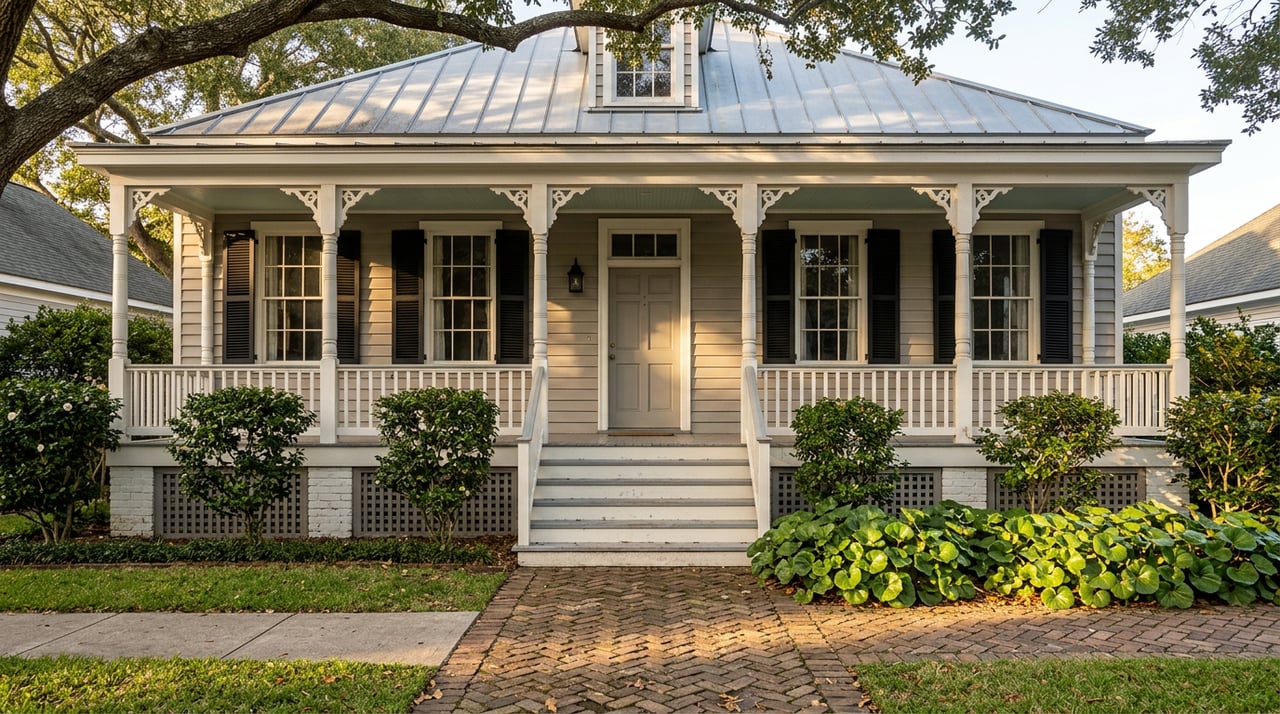
Creole cottages are among the earliest residential forms in New Orleans. The PRC’s guide to vernacular architecture traces them to roughly the 1790s through the 1850s and describes them as compact homes that are typically shorter and squarer than shotguns. You will often notice a steep roof, a simple layout, and a form that sits close to the street.
In Marigny, Creole cottages are an important part of the neighborhood’s architectural identity. The city’s district guide notes that many are 1 1/2 stories tall, and rear yards are often enclosed. That form creates a very different impression from the long, linear look of a shotgun house.
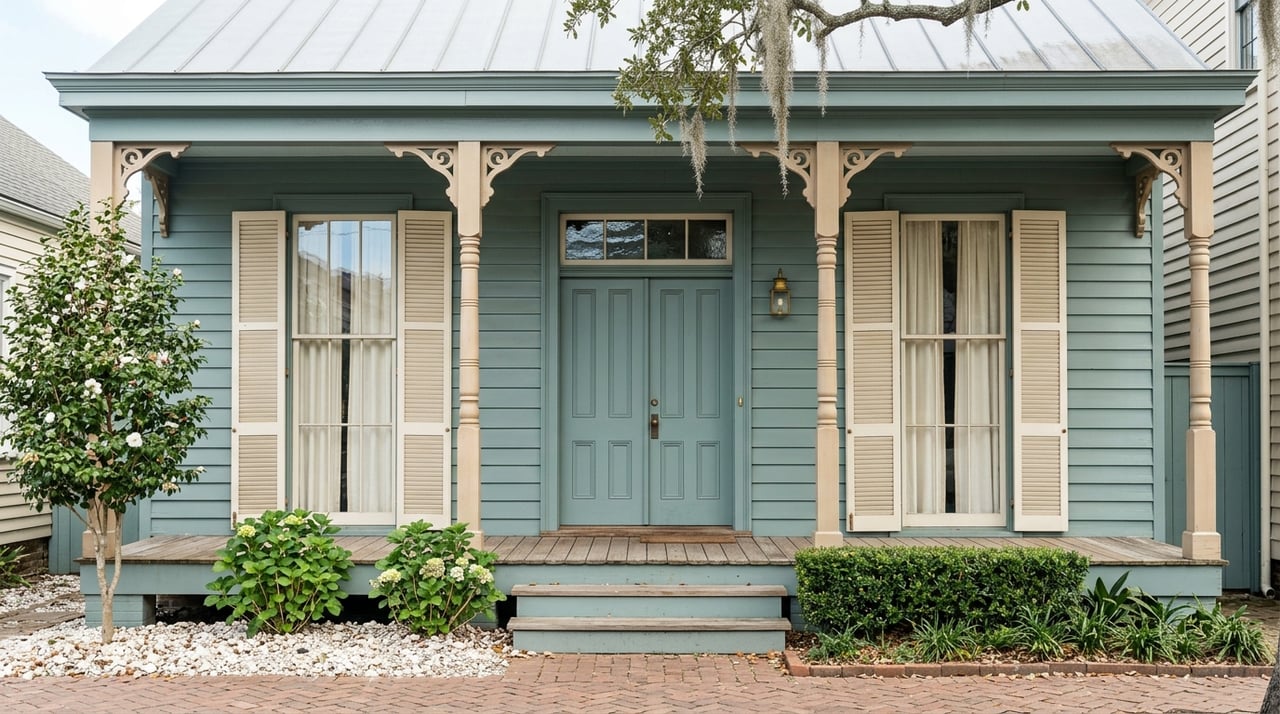
One of the most interesting things about Creole cottages is how often they show signs of change over time. PRC notes that many picked up later Greek Revival details or Eastlake-style corbels, which means a home may keep its older structure while showing decorative elements from a later era. If you are touring homes, that layered look is not unusual. It is part of the story.
In Bywater, Creole cottages are present but less dominant. They tend to appear as scattered historic holdovers within a streetscape that is more strongly defined by shotgun houses.
How to Spot a Creole Cottage
If you are trying to identify one from the sidewalk, look for these cues:
- A compact, more square-shaped footprint
- A roof that feels steeper and more prominent
- A facade close to the street
- A simple arrangement of rooms with little or no hallway
- Historic details that may mix early form with later trim updates
Shotgun Houses as the Signature Style
If one housing type defines both neighborhoods at a glance, it is the shotgun. The PRC architectural overview describes shotguns as long, narrow homes with rooms arranged one behind another. The city’s Marigny guide adds that shotgun cottages began appearing in the late 1840s and remained common into the early 20th century.
In Bywater, shotguns are especially important. The city’s Bywater historic district survey identifies single and double shotguns as the most common building types in the neighborhood. If you are walking the area, this is the style you are most likely to notice again and again.
Shotguns are simple in concept, but they are not all the same. Some are single shotguns, some are doubles, and some include a camelback addition with a rear half-story. That flexibility allowed the type to evolve while still keeping its recognizable shape.
Marigny and Bywater also show how decorative details can change the feel of a shotgun. The city guide and Faubourg Marigny Improvement Association home-tour examples show shotguns with Italianate, Greek Revival, and other classical details layered onto the basic form. So while the layout may be straightforward, the exterior character can still feel richly detailed.
How to Spot a Shotgun House
Look for these traits when you are viewing homes or walking the block:
- A narrow facade facing the street
- A long footprint extending back on the lot
- A front porch or stoop
- Rooms arranged in a line from front to back
- Variations such as double shotguns or camelbacks
Classical Revival in Marigny
Not every historic home in these neighborhoods is informal or compact. Marigny also includes more formal houses with classical detailing. PRC identifies Classical Revival homes as part of the neighborhood mix, and the city notes later neo-classical and Colonial examples scattered through the district.
A PRC style description highlights common Classical Revival features such as symmetry, double-hung windows, Corinthian columns, and dentils. In plain terms, this style borrows from Greek and Roman architecture. It often looks more balanced, more formal, and more composed than a neighboring shotgun or cottage.
This distinction matters if you are comparing blocks or evaluating a property’s architectural presence. In Marigny, Classical Revival homes can stand out as slightly grander or more architecturally dressed than surrounding houses. In Bywater, the classical vocabulary tends to show up more as part of a broader mix rather than as the dominant standalone style.
What Buyers Notice on Tour
When you tour homes in Marigny or Bywater, architecture is not just about style labels. It is about reading the details that tell you how much character remains and how the property has evolved. The research suggests a few especially useful elements to watch.
Start with the roofline and overall shape. A shorter, squarer form may point to a Creole cottage, while a long narrow body usually suggests a shotgun. Porch depth, door placement, and the rhythm of windows can also tell you a great deal before you ever step inside.
Then look closer at the trim and millwork. The PRC recommends paying attention to shutters, door and window trim, and original mantel or millwork details when trying to understand a home’s age and character. These details often reveal whether a house has kept much of its historic fabric.
It is also smart to notice the lot itself. The city’s district guidance explains that these neighborhoods typically have smaller lots, shallower yards, and more reliance on street parking than newer suburban areas. That pattern is part of the historic urban form, not a flaw.
Quick Touring Checklist
- Roof shape and building form
- Porch depth and front entry placement
- Window and door trim
- Original millwork, mantels, and brackets
- Street-facing facade integrity
- Lot size, yard depth, and parking setup
Why So Many Homes Feel Updated Inside
One of the most appealing things about Marigny and Bywater is that many homes preserve their historic street presence while offering more modern interiors. Recent Marigny home-tour examples include double shotguns converted to single-family residences, restored shotguns with original siding and windows preserved, and a Neo-Classical shotgun double reworked while keeping the historic layout legible.
The same pattern appears in broader preservation work. PRC recognition of historic renovation projects shows that owners often keep facades, windows, millwork, and defining details while updating kitchens, baths, and major systems inside. For buyers, that often means you can enjoy architectural character without giving up livability.
If you are considering future changes, exterior work in local historic districts may require review. The city’s HDLC design guidelines explain that visible exterior changes such as windows and doors can require a Certificate of Appropriateness. That is one reason experienced guidance matters when you are evaluating renovation potential.
What This Means for Buyers and Sellers
If you are buying in Marigny or Bywater, understanding the difference between a Creole cottage, a shotgun, and a more formal classical house can help you recognize value beyond square footage alone. Form, detail, and preservation quality all shape how a home lives and how it is perceived in the market.
If you are selling, those same features are part of the home’s story. Original brackets, historic siding, old-growth millwork, and a well-preserved facade are not just charming details. They help define the property’s identity and can shape how buyers respond to it.
For design-minded clients, these neighborhoods offer something special: homes that often balance historic form with thoughtful updates. That is where careful presentation, renovation planning, and market positioning can make a meaningful difference.
If you are thinking about buying or selling a historic home in New Orleans, The Martzolf Group brings a design-forward perspective to architecture, presentation, and value. From identifying character-defining details to helping you understand a home’s potential, our team is here to guide you with clarity and care.
FAQs
How can you tell a Creole cottage from a shotgun house in Marigny or Bywater?
- A Creole cottage is usually shorter and more compact, while a shotgun is long and narrow with rooms lined up from front to back.
What architectural style is most common in Bywater?
- Single and double shotgun houses are the most common building types identified in Bywater’s historic district survey.
Are Classical Revival homes more common in Marigny or Bywater?
- Classical Revival houses are more strongly associated with Marigny, while Bywater is better known for shotguns, cottages, and a broader mix of details.
Why do many Marigny and Bywater homes look historic outside but modern inside?
- Renovation examples in both neighborhoods show that owners often preserve facades, windows, rooflines, and millwork while updating interior layouts, kitchens, baths, and systems.
What should buyers pay attention to when touring historic homes in Marigny and Bywater?
- Focus on roof shape, porch depth, trim, shutters, original millwork, and how much of the home’s street-facing historic character remains intact.